
The short answer
If your AC is blowing warm air, running constantly, making new noises, or leaking water, it usually needs a repair visit rather than a full replacement. A technician finds the cause, explains your options in plain terms, and gives you a price before any work starts.
When your air conditioner stops keeping up, the house gets uncomfortable fast, especially in the hotter inland and southern parts of the Santa Clara Valley. FrostPoint AC Repair diagnoses and fixes central air conditioners and heat pumps for homeowners in San Jose and surrounding communities. This page covers the warning signs worth acting on, what a technician checks during a repair visit, how to think about repairing versus replacing an older system, what drives the cost of a repair, and what to expect from the moment you call to the moment the system is running again.
Signs your air conditioner needs repair
Most AC problems start small. A system that is a little slower to cool or a little louder than usual is often telling you something before it fails outright. Catching it early can mean a simpler repair and less time without cooling on a hot afternoon.
In the Santa Clara Valley, summers are dry and warm, and inland and southern neighborhoods run noticeably hotter than areas near the Bay. That means systems in those areas often work harder and longer, and small issues tend to show up during the first stretch of real heat. Call for service if you notice any of the following:
- Air from the vents feels warm, lukewarm, or weaker than it used to
- The system runs almost nonstop but the house never reaches the thermostat setting
- The outdoor unit hums, buzzes, clicks, rattles, or grinds
- Frost or ice on the copper lines or the indoor coil
- Water pooling near the indoor unit, furnace closet, or attic air handler
- The system turns on and off in short, frequent bursts
- Breakers trip when the AC starts
- Musty, burning, or electrical smells from the vents
- Some rooms are much warmer than others when they didn't used to be
- Your electric bill climbs without a change in how you use the AC
What we check during a repair visit
A good repair starts with an accurate diagnosis. Swapping parts until something works wastes your time and money, so we test the system step by step and look at how the parts work together, not just the one that seems broken.
Here is what a typical diagnostic covers, depending on what the system is doing:
- Thermostat settings, wiring, and whether it is calling for cooling correctly
- Electrical connections, breakers, disconnects, and signs of overheating
- Capacitors and contactors, which commonly fail and stop the outdoor unit from starting
- Compressor and outdoor fan motor operation
- Refrigerant pressures and temperatures, and signs of a leak
- Indoor evaporator coil and outdoor condenser coil condition and cleanliness
- Air filter, blower motor, and overall airflow
- Condensate drain line, pan, and any safety float switch
- Visible ductwork near the equipment for disconnected or crushed sections
Repair or replace: how to decide
Many AC problems are straightforward repairs: a failed capacitor, a clogged drain line, a worn contactor, or a dirty coil. In those cases, repairing is usually the sensible choice, and we will tell you so.
Replacement starts to make more sense when a system is older, needs a major component like a compressor or coil, has a refrigerant leak that keeps coming back, or has needed several repairs in a short time. We'll walk you through the condition of the system and the realistic choices, and the decision stays yours.
If you do consider replacement, a heat pump is worth a look. It cools like an air conditioner and also heats the home. That matters locally because, under Bay Area Air District rules, natural gas furnaces made from 2029 on must meet a zero-NOx standard, which in practice points toward heat pumps when a furnace is replaced after that date. Those rules don't require you to replace working equipment; they apply only when a furnace fails or is replaced.
On incentives: the federal Energy Efficient Home Improvement Credit only covered qualifying heat pumps placed in service before the end of 2025, so it isn't available for new installations now. BayREN and your local clean energy provider may offer heat pump or electrification incentives, but amounts and availability change by funding cycle, so we confirm what's currently offered before including it in any quote.
What affects the cost of an AC repair
Every repair is priced after diagnosis, because two systems with the same symptom can have very different causes. We explain the price and what it covers before any work begins. These are the main factors that affect what a repair costs:
- The part that failed: small electrical parts cost far less than motors, coils, or compressors
- Whether the part is common or has to be ordered for your specific make and model
- Refrigerant type and how much is needed, plus whether a leak must be found and repaired first
- How easy the equipment is to reach, such as a tight attic or crawlspace versus an open side yard
- The age and condition of the system and whether related parts are also worn
- Timing, including after-hours or urgent visits during a heat wave
How a repair visit works
When you contact us, we'll ask what the system is doing, how old it is if you know, and when the problem started. That helps the technician arrive prepared. We'll set an appointment window that works for you.
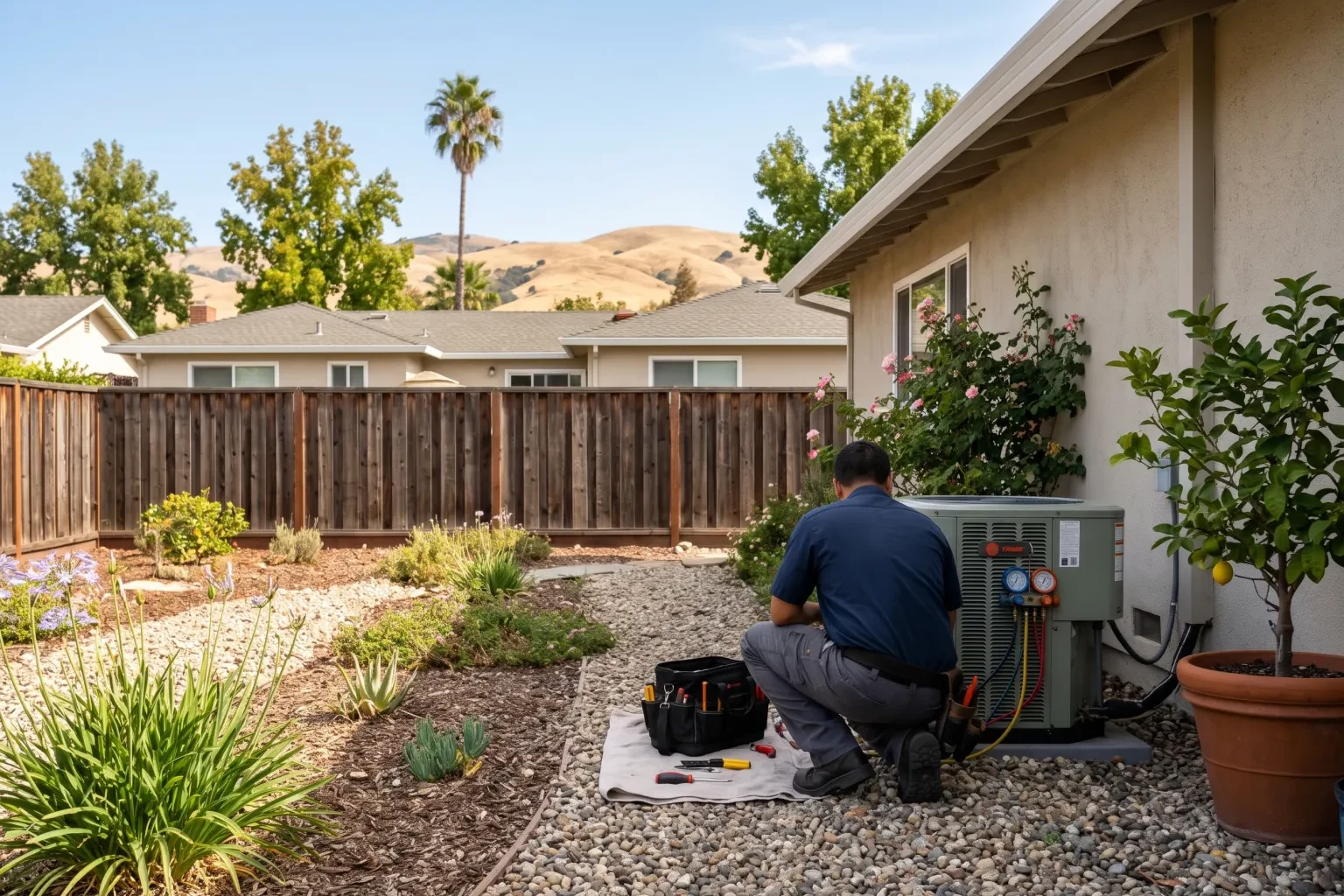
On arrival, the technician talks with you about the problem, then inspects and tests the indoor and outdoor equipment. Once the cause is found, you'll get a clear explanation of what's wrong, what the repair involves, and the price. If more than one reasonable option exists, we'll lay them out side by side.
With your approval, we make the repair, often the same visit when the part is on hand. If a part needs to be ordered, we'll tell you the expected timing and schedule the return. Before leaving, the technician runs the system, confirms it's cooling properly, cleans up the work area, and points out anything you should keep an eye on, such as filter changes or a drain line that tends to clog.
AC Repair by city
- AC Repair in CampbellLocal service & repairs
- AC Repair in Los GatosLocal service & repairs
- AC Repair in Monte SerenoLocal service & repairs
- AC Repair in Santa ClaraLocal service & repairs
- AC Repair in SaratogaLocal service & repairs
- AC Repair in CupertinoLocal service & repairs
- AC Repair in MilpitasLocal service & repairs
- AC Repair in SunnyvaleLocal service & repairs
- AC Repair in Los AltosLocal service & repairs
- AC Repair in Mountain ViewLocal service & repairs
- AC Repair in Morgan HillLocal service & repairs
- AC Repair in FremontLocal service & repairs