
The short answer
Duct cleaning makes sense when you see visible buildup, find signs of pests or mold, have just finished a renovation, or notice dust blowing from vents. Many homes don't need it often, so we inspect first and recommend cleaning, sealing, repair, or replacement based on what we actually find.
Your ducts move every bit of air your furnace, heat pump, or air conditioner produces, but most homeowners rarely see them. Over time they can collect dust, construction debris, pet hair, and sometimes pests or moisture. Ducts can also leak, sag, or come apart, which wastes the air you pay to heat and cool. FrostPoint AC Repair cleans and inspects duct systems for homeowners in San Jose and nearby South Bay cities. We will tell you plainly whether your ducts need cleaning, repair, or replacement, or whether they are fine as they are. Not every home needs duct cleaning, and we won't recommend it if yours doesn't.
Signs Your Ducts May Need Cleaning
Dust in a home comes from many sources, so a dusty house alone doesn't prove your ducts are dirty. These signs are more specific and are worth a closer look.
In the Santa Clara Valley, dry summers mean a lot of fine dust in the air, and many homes run their AC hard during hot spells, especially in the inland and southern parts of the valley. That puts more air through the ducts and can speed up buildup where filters are loose or changed rarely.
- Visible dust or debris puffing out of supply vents when the system starts
- Heavy buildup on return grilles or just inside the duct openings
- Signs of rodents or insects, such as droppings, nesting material, or odors
- Visible mold growth inside ducts or on the air handler
- Recent remodeling, drywall work, or flooring sanding that ran while the system was on
- A musty or stale smell that gets stronger when the system runs
- Moving into an older home with no record of duct service
What We Check During an Inspection
Cleaning dirty ducts that are also leaking or damaged only solves half the problem. That's why our technicians look at the whole air path, not just the inside of the vents. We use cameras where we can't reach by hand, and we show you what we see.
Where we can get access, we check ducts in the attic, crawlspace, or garage, since those runs are most exposed to heat, moisture, and pests.
- Supply and return ducts for dust, debris, mold, and pest activity
- Duct connections, joints, and boots for gaps and separations
- Flexible duct for crushing, kinking, sagging, or tears
- Insulation on ducts in unconditioned spaces like attics and crawlspaces
- The blower, evaporator coil area, and plenums, where buildup often starts
- Filter fit and filter slot condition, since a poor seal lets dust bypass the filter
- Airflow at registers to spot rooms getting too little air
Clean, Repair, or Replace?
Once we've inspected, we'll explain your options in plain terms. In many cases a good cleaning and some targeted sealing is enough. Metal duct in solid shape can often last a long time with occasional attention.
Repair makes sense when the problem is limited to specific spots: a disconnected run, a torn section of flex duct, a crushed line, or leaky joints. We can reconnect, re-strap, seal, and replace individual sections without redoing the whole system.
Replacement is worth considering when flex duct is brittle or widely damaged, insulation has broken down, there's extensive mold or pest contamination, or the layout simply can't deliver enough air to some rooms. It's also worth discussing if you plan to switch to a heat pump. Bay Area Air District rules will require new gas furnaces made from 2029 on to meet a zero-NOx standard, which points many homeowners toward heat pumps. Those rules don't force you to replace working equipment, but if a change is coming, it can make sense to check that your ducts suit the new system first.
What Affects the Cost of Duct Work
We give you a clear quote after we inspect, because duct jobs vary a lot from home to home. The main factors are below.
- Size of the home and the number of supply and return vents
- How easy it is to reach the ducts, such as tight attics, low crawlspaces, or ducts hidden in walls
- Type of duct: rigid metal, duct board, or flexible duct each clean differently
- Amount and type of buildup, including construction debris or pest contamination
- Whether mold remediation or sanitizing is needed
- Any sealing, insulation, or section replacement added to the job
- Whether the blower and coil also need cleaning
How a Duct Cleaning Visit Works
First, we schedule a time that works for you and ask a few questions about what you've noticed. When the technician arrives, they inspect the system and show you photos or camera footage before any work begins. You'll get a clear recommendation and a quote, and nothing proceeds without your approval.
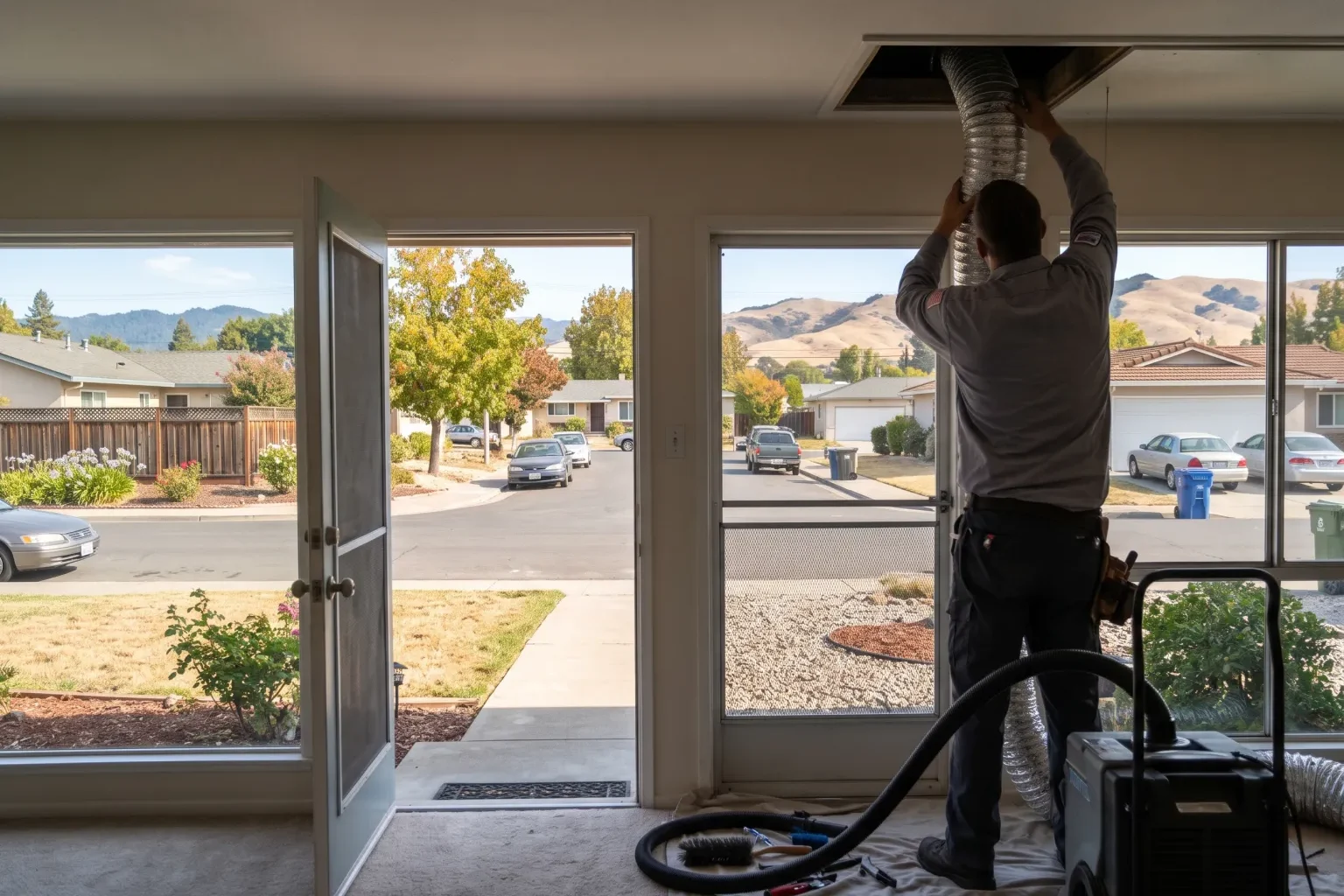
For cleaning, we protect floors and furniture near the work area, cover registers, and connect a high-powered vacuum to put the duct system under negative pressure. We then loosen debris with brushes and air tools, working through supply and return lines so dislodged dust is pulled out of the house rather than blown into rooms. We clean registers and grilles and, when agreed, the blower and coil area.
Before we leave, we walk you through the results, replace or recommend the right filter, and point out anything that needs follow-up, such as leaky joints or a crushed run. We also share simple tips to keep your ducts cleaner, like changing filters on schedule and closing vents during dusty remodeling.